The mist clings to the Kabini backwaters like a silken veil, carrying the damp, earthy scent of the teak forests and the distant, rhythmic lap of water against the banks. While most travelers arrive with their lenses trained on the shadows of the undergrowth in search of a leopard’s spots, the true maestros of this wilderness are found in the canopy and along the reeds. To watch the birds of Kabini is to witness a masterclass in survival, where beauty is never merely ornamental, and every behavior—no matter how strange—is a calculated strategy for life in the wild.
The Ultimate Leap of Faith: The Hornbill’s Secret Sanctuary
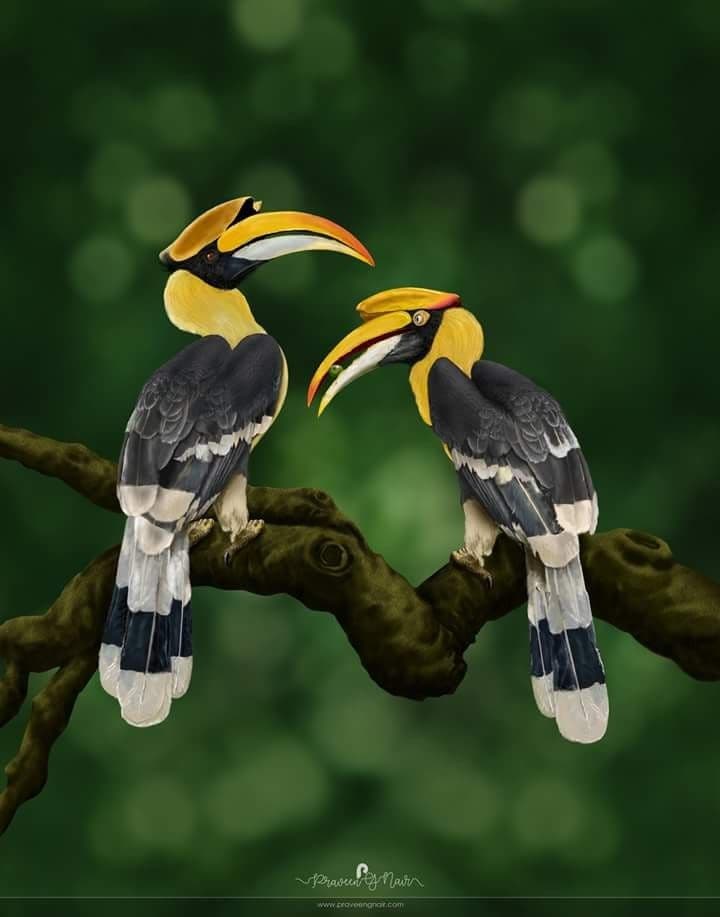
High in the fruiting trees, the silence is often shattered by the loud, raucous calls of the Malabar Pied Hornbill. With its striking black-and-white plumage and a massive yellow bill topped by a prehistoric-looking casque, it is a bird that demands attention. Yet, for all its visible grandeur, its most remarkable trait is a hidden ritual of extreme isolation and profound partnership. This is a story of total domestic trust; while the male patrols the forest for fruits and insects, the female commits to a period of complete "self-imprisonment" to ensure the safety of their brood.
"During nesting, the female seals herself inside a tree cavity, leaving only a narrow slit through which the male provides food."
This high-stakes collaboration is a cornerstone of the forest's health. As the male diligently feeds his entombed mate, he inadvertently acts as a vital courier for the forest, dispersing seeds that maintain the region’s rich biodiversity.
The Paradox of the Snake Bird: Why This Diver Can’t Stay Wet
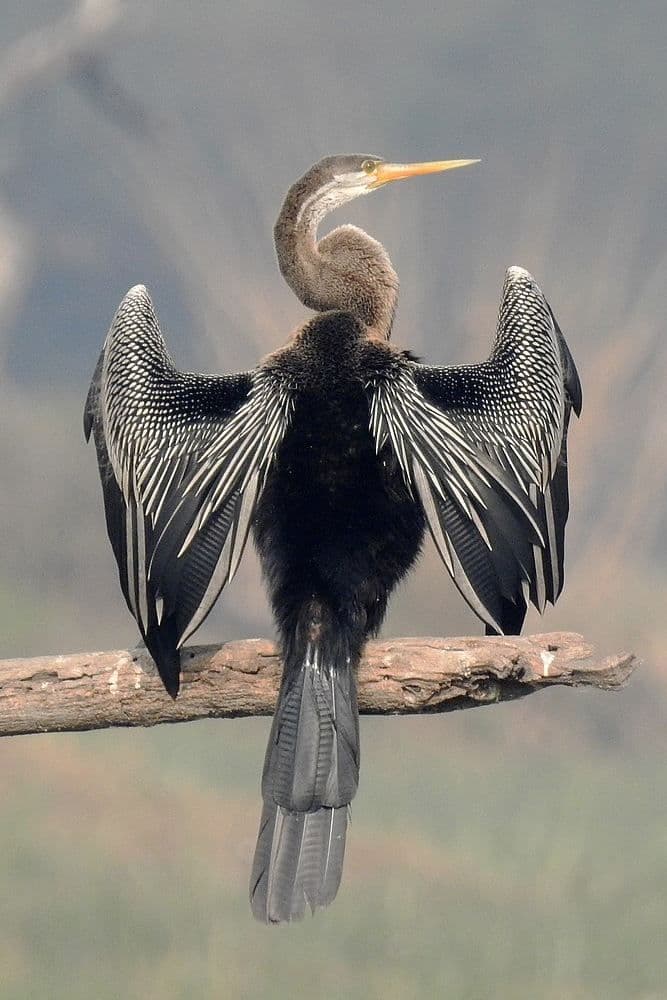
As the sun begins to dip, casting a golden hue over the wetlands, a long, slender neck may be seen undulating above the water’s surface like a cobra ready to strike. This is the Oriental Darter (Anhinga melanogaster), a bird so aptly nicknamed the Snake Bird for its serpentine appearance while swimming.
A Surprising Vulnerability: While most water birds rely on oil-slicked, waterproof feathers to stay buoyant, the Darter’s plumage is purposefully not fully waterproof. It is a common and striking sight to see them perched on a half-submerged log, wings spread wide in a stark silhouette to dry in the afternoon sun.
The Specialist’s Trade-off: This lack of waterproofing is not a flaw, but a brilliant evolutionary trade-off. Without the air trapped in waterproof feathers to keep it afloat, the Darter can submerge with ease, navigating the depths with the precision of a torpedo. It uses its sharp, pointed beak to spear fish underwater—a feat of hunting that would be far more difficult if it were fighting its own buoyancy.
The Aerial Angler: Feet-First Into the Deep
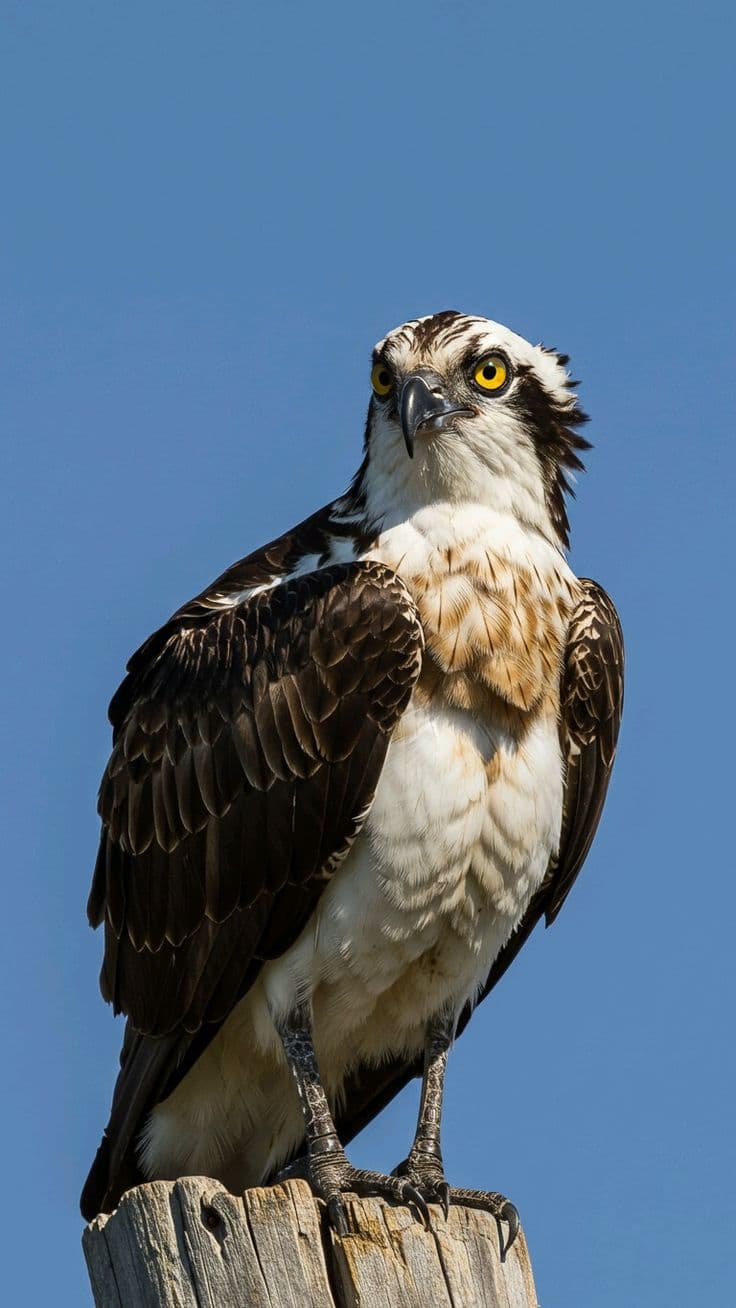
While the Darter hunts from below, the Osprey dominates from above. Known as the "Master Fisher of the Skies," this large raptor is a study in focused intensity. With its long, powerful wings and distinctive brown-and-white markings, it patrols the rivers and lakes with a singular purpose.
"Their remarkable hunting ability has earned them the nickname 'Fish Hawk,' a testament to a diet that consists almost entirely of fish."
The Osprey’s technique is a marvel of biological engineering. Upon spotting prey with its keen eyesight, it executes a breathtaking dive, hitting the water feet-first. Its specialized, sandpaper-rough talons ensure that a slippery fish has no hope of escape. Because the Osprey is a specialist that requires pristine, fish-rich waters, its presence in Kabini is a glowing report card for the health of the entire aquatic ecosystem.
The Forest Architect: More Than Just a Drummer
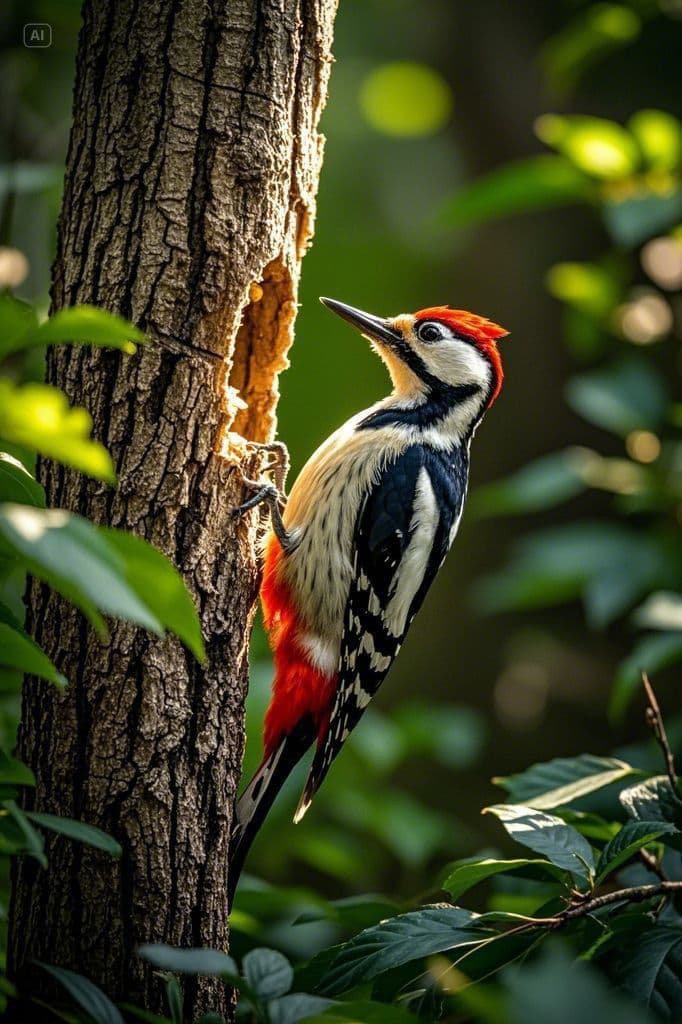
Deep within the wooded thickets, a persistent, staccato drumming echoes through the trees—the unmistakable signature of the White-bellied Woodpecker (Dryocopus javensis). One of India’s largest woodpeckers, this bird is a commanding presence with its ink-black body and a flaming red crest that looks like a spark against the green leaves.
While its powerful beak is primarily a tool for drilling into bark to find larvae, the woodpecker serves a much larger purpose: it is the forest’s primary architect. The deep tree cavities it meticulously hollows out eventually become vital homes for a variety of other wildlife species that lack the ability to carve their own shelters. By acting as a tireless landlord for the forest community, this bird underpins the social and ecological structure of the canopy.
The Ghost of the Understory: The Flycatcher’s Transformation
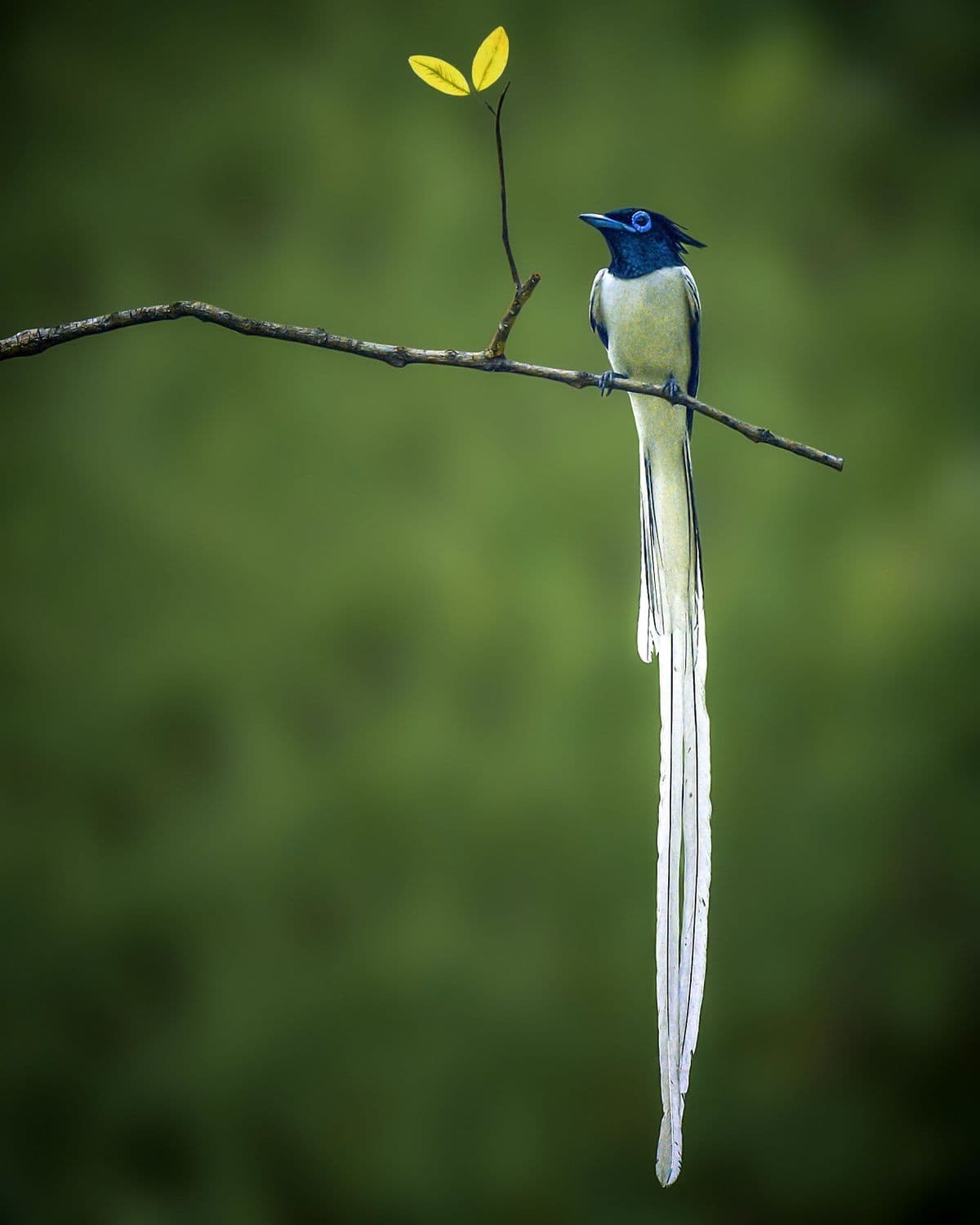
If the woodpecker is the forest’s architect, the Indian Paradise Flycatcher is its most ethereal inhabitant. To see an adult male darting through the understory is to see a shimmering "ghost" in motion. This species exhibits breathtaking sexual dimorphism; the male is an electric flash of white plumage with long, ribbon-like tail feathers that trail behind him like silk streamers, while the female is a lovely, understated reddish-brown.
This bird is more than just a visual masterpiece; it is an aerial acrobat. With incredible agility, it snatches flying insects mid-air in a display of graceful flight that has made it a favorite of naturalists and the proud state bird of Madhya Pradesh. Watching its white streamers dance through the shadows of the forest is perhaps the most poetic experience Kabini has to offer.
Conclusion: A New Perspective on the Canopy
The birds of Kabini prove that nature's "intelligence" is often found in the most unexpected places—in the self-imposed walls of a hornbill’s nest, the water-soaked feathers of a darter, or the architecturally sound cavities of a woodpecker. Each species is a vital thread in the complex ecological tapestry of this landscape.
For those looking to trade the roar of the city for the melodious calls of the Asian Green Bee-eater or the majestic sight of a Grey-headed Fish Eagle, KabiniKaanana Farm Stay offers the perfect front-row seat. Tucked away in the heart of this vibrant greenery, it serves as a natural gateway to the wild. By slowing down and looking beyond the binoculars, we don't just see the birds; we begin to understand the profound secrets of the world they build every day. What other wonders might you discover the next time you quiet your mind and look toward the trees?