Kabini in monsoon feels less like a typical wildlife trip and more like stepping into a landscape that has suddenly come alive. The backwaters fill up, the forest turns intensely green, and even the air seems heavier with the smell of rain and wet earth.
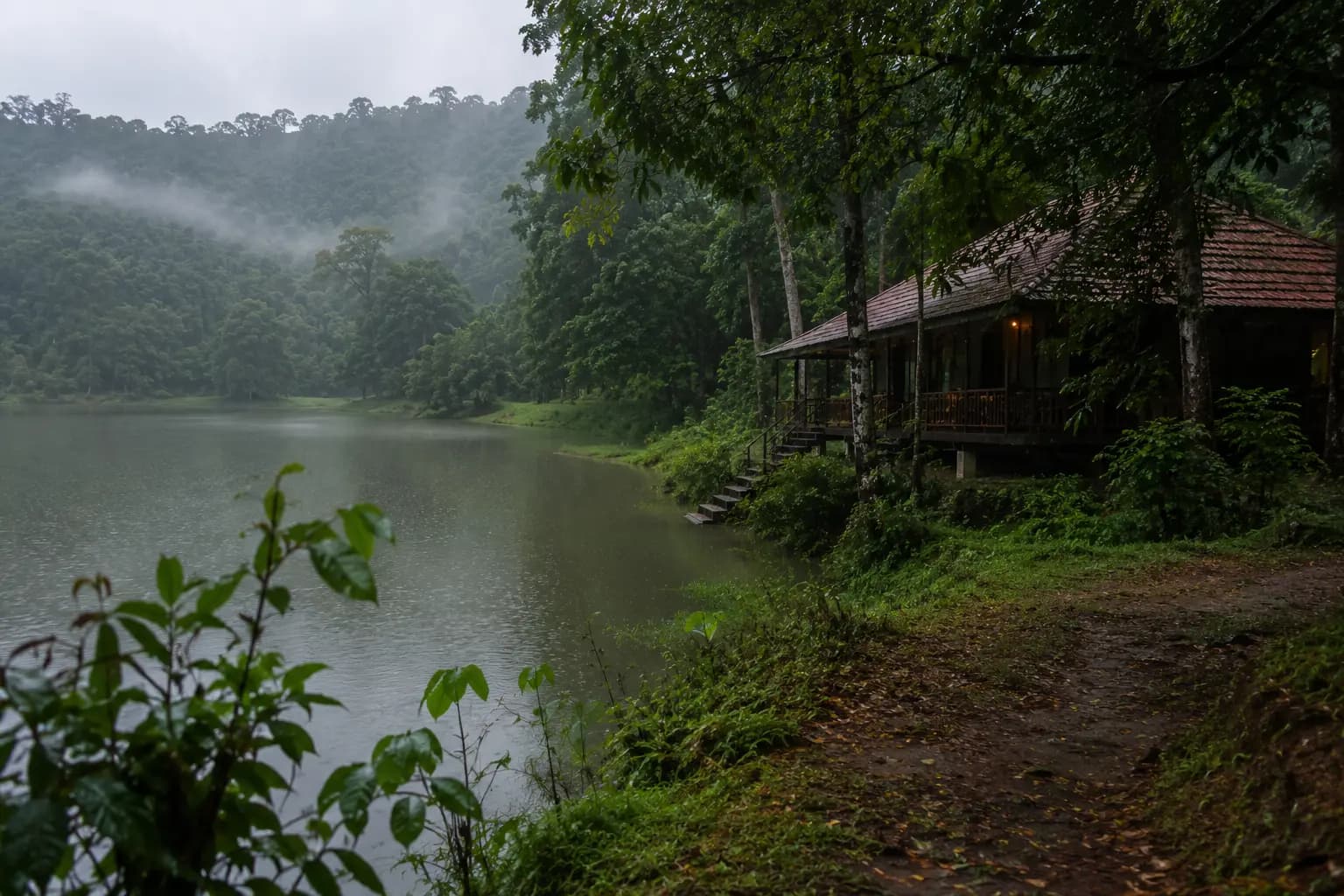
If you enjoy quiet places and do not mind a little unpredictability, this can be one of the most beautiful times to be here. In the dry months, Kabini is often about sightings, safari talk, and clear views along the forest edge. In the rains, it becomes softer, slower, and far more atmospheric.
What changes in the rain
Wildlife sightings at Nagarhole are harder during peak monsoon because the forest is thick and animals spread out across a wider area. Safaris still run, but expectations need to be realistic. What you lose in tiger sightings, you often gain in atmosphere — a forest full of sound, green beyond description, and the sight of the backwaters completely full.
Birdwatching by the water remains rewarding even in the rain. Resident species stay active, the backwater edge stays lively, and quiet mornings on the waterfront often feel just as memorable as a busy safari.
Who monsoon Kabini suits best
Monsoon works well for travellers who want a slow, private trip rather than a packed activity schedule. Couples looking for a rainy-season escape, solo travellers who enjoy quiet nature time, and anyone who finds the green season more beautiful than the dry one will enjoy this version of Kabini.
It also suits travelers who enjoy privacy and a more personal atmosphere. With fewer guests around, the stay feels calmer and less rushed.
A few things to keep in mind
Pack light waterproof layers and good footwear for wet paths. Mobile connectivity can be slower in heavy rain. Plan your safari early and keep one day flexible for weather.
Kabini in monsoon does not suit travelers who need guaranteed wildlife action every hour. But if you are happy to let the rain set the pace, it offers a quieter, greener, and more intimate version of Kabini that many visitors end up loving most.